Monday, January 30, 2012

Initial thoughts on This Blessed House

I think in some way, the blessed house itself is going to lead to Twinkle and Sanjeev loving each other. The way that the story opens with the thought that they will keep finding more Christian icons is a reflection of the little ways that Sanjeev notices the beauty in Twinkle. She is a free spirit and he is so completely analytical. They are such opposites, but it seems like they are committed to marriage, even thought their marriage seems like a pretty odd one from the outside looking in. I don't think I could ever marry someone who didn't know which Irish poet I was studying. Although this is the case with Twinkle and Sanjeev, they actually seem happy even though they are irritated with one another quite frequently.

Sanjeev is definitely irritated with Twinkle, but I think deep down, he really does love her. He is a considerate man to put up with her nonsensiscal and carefree attitude, and she is a gem to put up with his analytical mind. I guess if a person grew up in their culture, they would be thankful that they just got to meet their spouse before walking down the aisle.

In reality, I think people are irritated with those that they live with. Sure, for married couples who fall head over heals in love with each other, there is probably a honeymoon stage, but eventually reality has to hit. It seems like Sanjeev and Twinkle just skipped this honeymoon stage altogether and get to work on building a strong marriage by learning to love from the very beginning. They must learn to grow together as they grow older in years. They can't let their differences separate them if they want to stay in love and married for the rest of their lives. For better or worse, Sanjeev and Twinkle get to decide to be together from the very beginning.

Wednesday, January 25, 2012

Reading for Transformation

At the beginning of McAloon's essay, he mentions how he had to read the same poet's work over and over again to understand it. I have felt this before about different books or authors that I have read. I like that the author kept an open mind and kept revisiting poetry anyway.

It seems a bit sacrilegious to do Lectio Devina with something other than the Bible, but re-reading the same thing over and over and in different contexts has benefited me on more than one occasion, so I guess I don't see anything wrong with that. I often read a paragraph and glaze over it so I have to go back and read it again. This going back has often brought so much meaning to the text that I am no longer so upset that I'm sometimes a slow reader.

I love the quote by Schneiders. Our goal should be to come back different when we read something. If a person is a Believer, then everything he or she does should be a spiritual experience. I don't think God made us to be so compartmentalized. When I read, it's spiritual. Even when I'm filling my car with gas, it's spiritual. Something I've been doing lately is to practice living within the next five minutes. Because of this, I have noticed a lot more little details that God has been showing me along the way rather then worrying about what is going to happen in the next twenty years. I think this really applies to literature. I need to ask, “What can I get out of this right now?”


Poetry does, as the text says, give us words for things we are unable to express. David often expressed things so well in the Psalms that I could sit there and read the same verse over and over again and learn something new every time. He was often expressing something 5,000 years ago that lines up so well with where I am currently at in life. That is how a lot of poetry is, I think. When I can't think of what I want to say, sometimes someone else has already said it pretty well. Other times, I even like to write my own poetry, because it gives me time to chose the exact words for what I'm feeling or what I wish to convey about a particular moment or experience.

Monday, January 23, 2012

What We Talk About When We Talk About Love

The preface to this story was right. Carter does tell it like it is. His style is candid, and definetly not flowery. When an author uses less words, it sometimes helps me to think with more clarity while I'm reading. I could read many things into this story that were not actually written on the page. The preface says that Carter often uses blue-colar workers to get his point across, yet in this story, he uses Mel who is a cardiologist. The story is all about love, so this is quite ironic because I don't think Mel really knows how to love his wife. Mel now hates his ex-wife's guts. I think this shows that he is imature and not able to love Terri the way he could.

Mel agravated me. He didn't recognize the true love of the elderly couple. I think everyone in the room was agravated by him. He wants to be this knight in shining armor, yet he is devoid of real feeling. He loves his wife for her body, I think, yet he doesn't truly love her. Perhaps her old husband did really love her even though he was derranged. The former husband did not know what to do with such intense feelings, and ended up killing himself in the end. I think his ruined teeth reflected his deranged personality, and his gums his emotional state. I found myself wondering if he would have been better off dead so that he couldn't feel pain anymore. That is exactly what happened to him, though in the end.

I really enjoyed reading this story, especially when Mel told the story of the old couple. I was elated that finally, he meantioned true love- not love for physical or platonic reasons. The elderly couple had it right all along. Sure, they may have looked botched up on the outside, but there was nothing wrong with their hearts.

Wednesday, January 18, 2012

What You Read is What You Get

I can relate to the statement, “What you get out of what you read is determined by how you read.” I always get more out of what I read when I spend quality time with the text. That doesn't always mean that I have to be reading for hours in order to understand something, but that I must dig in to the text in a meaningful way. I have to underline, question, and examine what I'm reading in order to really understand what it is that the author is trying to convey. While I was studying “Active Reading of Literature,” I was reminded of the importance to really have a relationship with what I read. I should pursue the text so that I understand it as well as I possibly can.


I really liked the music analogy from the beginning of the reading. One of my music professors tells us to fall in love with music theory in a literal way. We should spend time with it, stare into it, analyze every aspect of it, and truly find a way to appreciate it. I guess that is how reading good literature should be. Of course, like any relationship, things might not work out and we may not end up liking what we read just as we might not end up loving a current boyfriend or girlfriend, but there are always important lessons learned from digging deep into something. I like the idea that I should have a conversation with what I am reading. The initial conversation is like a “blind date,” the reading said, a getting to know you or first impression stage. If I just sat and stared at my date without asking any questions, what would the point of the date be? Why would I even agree to go on a date in the first place? I think that is how it is with reading. I want to know what an author has to say. There are so many intriguing things that can be found within a work of literature.

It excites me to get to know new cultures and study more and more about them just by reading literature. Since I greatly enjoy traveling and have made it a big part of my life, it always interests me to learn about languages and cultures, and how they affect people. The cultural aspect of reading is quite appealing to me and I look forward to that part of this course.

Monday, January 16, 2012

From Conception


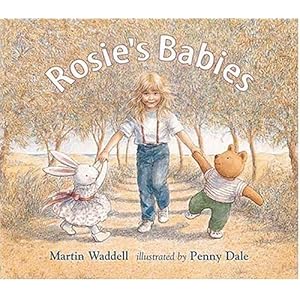
My mother read aloud to me while I was in the womb. I can remember sitting up every night before bed listening to her read Bible stories aloud to my brother and I. Throughout the day, she would answer my, “What does that say, mom,” questions with so much diligence even if I was only pointing to the milk jug on the kitchen table. She began buying books that had honors for their illustrations so that I could “read the pictures” in the car and entertain myself. My favorite childhood book was “Rosie's Babies,” by Martin Waddell. It is a story about a girl who takes her stuffed animals outside to play and makes mud pies with them. She treats the stuffed animals as if they are her own children. I did this often, and Rosie reminded me so much of myself: free spirited and such a mother even as a child. I have the illustrations of this book ingrained in my memory, especially a picture of Rosie and her babies laying in a huge bird's nest.

Over the course of my childhood, I was permitted to stay up as late as I wanted as long as I was in my bed reading. I can remember one occasion, I was so engrossed in a book that I was still wide awake at 2:00 AM. My mother walked in to check on me, smiled big, and told me to sleep in the next day if I needed to. I was homeschooled until the eighth grade, and I am so grateful for the opportunity to read whenever I wanted to, at times, for days on end.

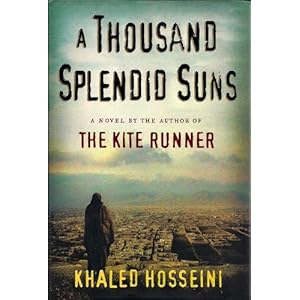
Growing up, I read a lot of historical biographies and autobiographies, and was especially interested in Clara Barton, George Washington, and Helen Keller. As a teenager and adult, I have found a love for British literature and historical fiction, but at times I climb out of my Austen and Swift pit to read things like Hossenni's, “A Thousand Splendid Suns,” or Francine River's fiction novels.

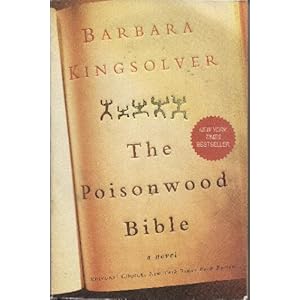
While I was reading Corrigan's essay, “Literature is a thing you do as part of life,” I thought about my most influential book other than the Bible. Although I find the classics to be suspenseful and gripping, one of my favorite books of all time would have to be “The Poisonwood Bible,” by Barbara Kingsolver. This book taught me so much about legalism, and although there are things about the book that I disagree with, it helped me to realize just how judgmental I had become over the course of my teen years. I agree with Corrigan's statement that, “What you get out of what you read depends on... where you are in your life when you read it.” Literature has most certainly shaped me for the better, and I must remember to incorporate it into my day to day life.